Your baby's growth and development - 8 months old
8-minute read
Key facts
- At 8 months old, your baby may sit without support, crawl or pull themselves up to stand.
- Sleep may seem more settled, with most sleep happening at night and fewer naps during the day.
- At 8 months old, babies often eat solid foods along with breast milk or formula.
- Your baby may feel most comfortable when you are around and may feel unsure around strangers.
- Teething often starts around this age and can make babies drool more or want to chew on things.
My 8-month-old baby
At 8 months old, your baby is becoming more active and curious. They may sit without support, crawl, pull themselves up to stand or move around furniture.
Your baby may have a more settled sleep pattern than in earlier months. Most sleep happens at night, with less sleep during the day. At around 8 months old, babies often have around 2 naps a day. This can vary and it is still normal for your baby to wake at night in their first year.
Your baby may also be teething at this age. This can be uncomfortable and your baby may seem unsettled, drool more or want to chew on things. You can help by offering safe teething toys and giving extra comfort.
Solid foods
At 8 months old, many babies eat solid foods alongside breast milk or formula. If your baby eats more solid foods, they may drink less milk.
This is an important time for your baby to learn about food. It is a good time to offer a wide variety of flavours and textures. At around 8 months old, your baby may be more open to trying new tastes and learning how to handle thicker or lumpier foods.
Your baby may enjoy finger foods such as:
- small pieces of soft raw fruit (such as banana or avocado)
- boiled or steamed vegetables (such as soft beans or pumpkin)
- toast or rusks
Regular cow's milk should not be used as the main source of milk in your baby's first year.
Fruit juice and sweetened drinks are also not recommended during your baby's first year.
How is my baby growing?
At 8 months old, your baby is growing steadily but usually not as fast as in the early months.
Every baby grows at their own pace. Some babies grow a little faster, while others grow more slowly.
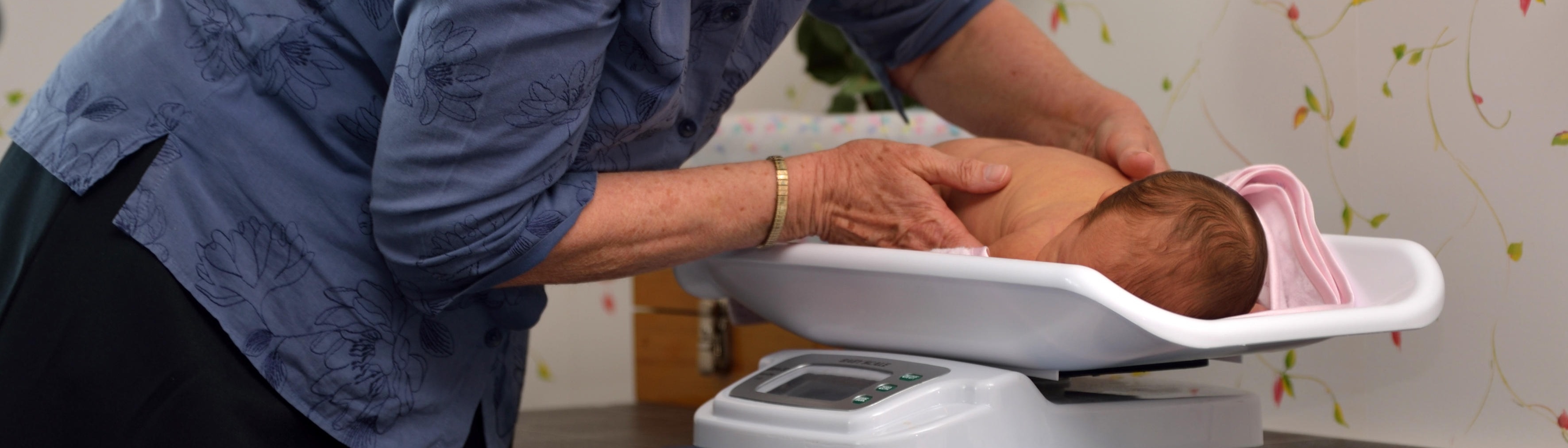
Your baby's weight and length will be checked at regular health checks. These measurements are compared with standard growth charts to check that your baby is growing steadily.
Understanding baby growth charts
A growth chart helps you and your doctor keep track of how your baby is growing.
What can my baby do at 8 months old?
While your baby will develop at a rate that's right for them, there are things that babies and children are generally expected to be doing at each age. These are called 'milestones'.
Physical development
Your baby may sit well with little or no support by now. They may roll both ways and pull themselves into a sitting position. They may also be able to pull themselves up to a standing position on furniture.
Your baby may also be crawling or shuffling on their bottom. Don't worry if your baby isn't crawling. Some babies never crawl and go straight to walking.
At around 8 months old, your baby's hand movements are becoming faster and smoother.
They also become more controlled, especially when they reach for and explore objects. Keep your baby safe by making sure anything dangerous — such as electrical cords, unstable furniture and hot drinks — are well out of reach.
Cognitive development
At 8 months old, your baby is learning by trying things out and seeing what happens. They may bang toys together, drop them and watch them fall, or look for a toy that is partly hidden.
This shows early problem-solving skills. Your baby is starting to understand that things still exist even when they cannot see them.
They may also:
- explore objects with their mouth — make sure small objects are kept out of reach to avoid choking
- turn pages in a book
- enjoy games like peek-a-boo
- become bored if left alone for too long
Social development
Your baby is more aware of people and places. They may turn when you say their name and smile or make sounds when looking in a mirror.
They often prefer familiar people at 8 months old and may feel unsure around strangers. They may look to you for comfort and reassurance.
They may also:
- react with excitement when they see another baby or young child
- smile or show excitement when they see you prepare food or run a bath
- enjoy back-and-forth play using eye contact and facial expressions
- stretch ut their arms to be picked up
Emotional development
At 8 months old, your baby may begin to seem more settled in their eating and sleeping patterns. Some babies enjoy predictable routines, which can help them feel safe and secure.
Attachment to caregivers is becoming stronger at 8 months old. They may need to 'check in' with you, using their voice or by looking for you. This is a normal part of emotional development.
Your baby may cry when you leave the room. This is also known as separation anxiety. When you respond and soothe them, your baby may settle more easily.
Language development
Your baby may turn toward people who are speaking and make sounds in response. Sounds may be used to get attention or start an interaction.
They may also cry to show needs like hunger, tiredness or wanting co/dummies-and-comfortersmfort.
Read more about learning to talk.
How can I help my baby develop?
As your baby settles into a daily routine, they are often awake more during the day. This gives you more time to interact and bond with them.
Talk and listen to your baby. Use different tones and facial expressions and respond to the sounds they make.
When your baby is around unfamiliar people, your reassurance can help them feel safe and secure.
- reading books together
- singing songs
- making funny or playful sounds
- playing with toys
Your baby may enjoy tummy time more and can stay on their tummy for longer. Tummy time helps build strength for rolling, sitting and early movement. Try short periods that add up to at least 30 minutes a day. Always stay with your baby during tummy time and place them on their back for sleep.
When should I see my doctor or maternal child health nurse?
Talk to your doctor or maternal child health nurse if your baby:
- does not respond to familiar faces
- is not starting to make sounds
- is not trying to roll when playing on the floor
- is not exploring with their hands or feet
- is not holding or passing objects between their hands
- seems very uncomfortable during teething
At any age, it's important to speak to your doctor if your baby has stopped doing something they had already learned to do. This is sometimes called 'regression'.
Read more about common worries and fears for parents.
FIND A HEALTH SERVICE — The Service Finder can help you find doctors, pharmacies, hospitals and other health services.
Resources and support
If you are worried or would like to discuss any issues with your baby's development, speak to your doctor or maternal child health nurse.
You can also reach out to these support groups:
- The Australian Children's Education and Care Quality Authority has information about your child's development from 4 to 8 months old.
- The Australian Breastfeeding Association has information about weight gain and growth patterns in breastfed babies.
- Children's Health — Queensland Hospital and Health Service has a fact sheet on development skills and activities from 4 to 8 months old.
- Tresillian has information on baby milestones and development.
- Child Health Info has a child development guide from birth up to 12 months old.
Speak to a maternal child health nurse
Call Pregnancy, Birth and Baby to speak to a maternal child health nurse on 1800 882 436 or video call. Available 7am to midnight (AET), 7 days a week.
Subscribe to Pregnancy, Birth and Baby's monthly newsletter for more information about your baby.
Languages other than English
The Government of Western Australia Child and Adolescent Health Service has translated child health fact sheets in languages other than English.
Find information in a range of community languages about your 8-month-old baby's development.
Information for Aboriginal and/or Torres Strait Islander peoples
SMS4 Deadly Dads helps First Nations dads connect with their bub, support mum and look after themselves.
Get Up and Grow is a resource for Aboriginal and/or Torres Strait Islander peoples about the first foods you will feed your baby.
Australian Breastfeeding Association has breastfeeding resources for Aboriginal and/or Torres Strait Islander peoples.