


Hiccups
Key facts
What are hiccups?
Hiccups, also called hiccoughs, are a common condition in children and adults. Hiccups are caused when your diaphragm (the thin muscle between your chest and abdomen) involuntarily contracts and tightens.
Your diaphragm is a large sheet of muscle that sits between your chest and stomach. It works with your intercostal muscles (the small muscles between your ribs) to help you breathe. An involuntary (automatic) sharp intake of breath causes your vocal cords to close quickly, which makes the familiar hiccup sound.
Do babies get hiccups during pregnancy (in utero)?
Yes, babies can get hiccups while they're in your uterus.
Hiccups can feel different to your baby kicking or moving around. Many people describe it as a series of small, jerky, rhythmic movements.
It is not fully understood why babies hiccup. It might be related to the development of their lungs and diaphragm.
Hiccups are nothing to be concerned about. However, if you notice any change in your baby's usual movements or patterns, contact your midwife or doctor immediately.
What are the symptoms of hiccups?
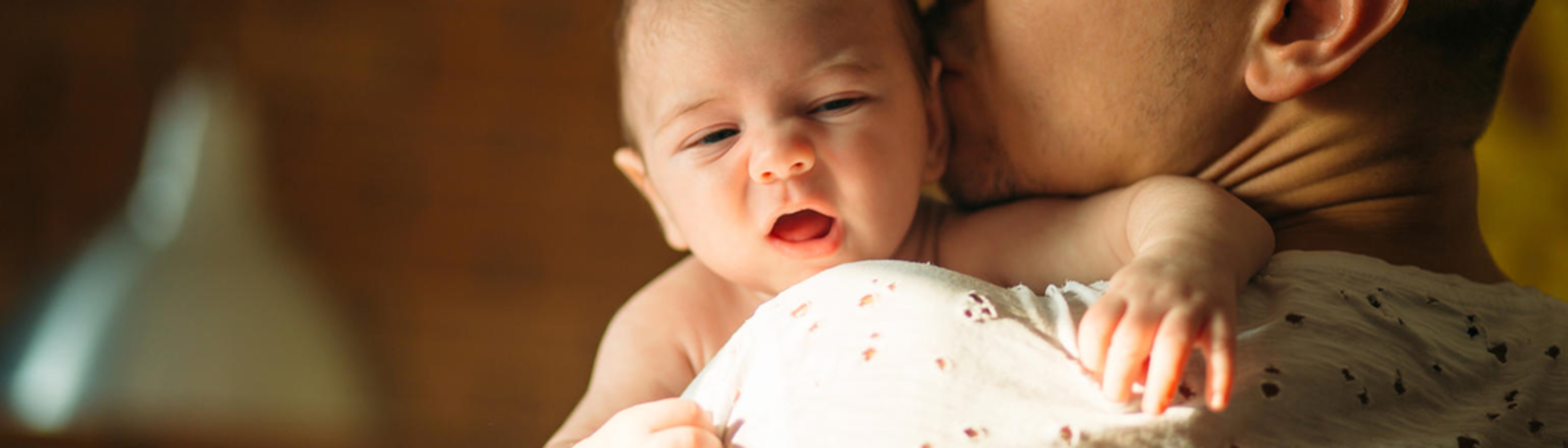
When your baby hiccups, it can look as if their whole body is moving. Their hiccups can be quite loud. It is unlikely that your baby feels any pain when they are hiccupping. Hiccups do not bother most babies.
Hiccupping can sometimes happen together with episodes of regurgitation (spitting up), when small amounts of milk are brought up.
Babies who have been diagnosed with gastro-oesophageal reflux disease (GORD) and also have hiccups may feel discomfort when acid from the stomach comes up the oesophagus (food pipe) because of reflux.
What causes hiccups?
Hiccups happen when the nerves in your diaphragm are triggered, causing it to go into spasm.
It is not clear what causes the nerves to be stimulated in the first place.
When should I see a doctor?
How is hiccups diagnosed?
Your baby's doctor can diagnose their hiccups by observing and examining them and asking you questions about their symptoms and medical history.
How is hiccups treated?
If your baby has hiccups, they do not need to be treated. Usually, they will stop on their own within a few minutes.
There is little that can be done for babies who are hiccupping, other than to sit them upright and try burping them.
If your baby seems to be upset about their hiccups and they have GORD, you can try some of these tips to help them:
- Keep your baby more upright — feed your baby when they are not lying down. After a feed, keep your baby upright.
- Manage your baby's feeds — offer your baby smaller portions and more frequent feeds.
- Seek advice — an experienced lactation consultant or child health nurse can observe how your baby feeds, and help you find ways to reduce discomfort.
What are the complications of hiccups?
Your baby is unlikely to develop any complications from their hiccups.
Resources and support
- The Australian Breastfeeding Association has information about babies bringing up milk and hiccups.
- Learn more about reflux in babies on The Royal Children's Hospital Melbourne's website.
Languages other than English
- The Royal Children's Hospital Melbourne has a collection of fact sheets translated into many community languages, covering a wide range of topics about your baby's health.
- The Sydney Children's Health Network has a fact sheet about common newborn concerns in many community languages.
- The Multicultural Centre for Women's Health has a range of health resources for women, available in more than 70 languages.
Information for Aboriginal and/or Torres Strait Islander peoples
- Visit Birthing on Country for information about projects that support Aboriginal and/or Torres Strait Islander babies and their families.
- Keeping Our Mob Healthy is a range of child health fact sheets developed for Aboriginal children, young people and families.

Speak to a maternal child health nurse
Call Pregnancy, Birth and Baby to speak to a maternal child health nurse on 1800 882 436 or video call. Available 7am to midnight (AET), 7 days a week.
Find out how we develop and review our content.
Last reviewed: October 2025
Need more information?
Hiccups | Better Health Channel

Wind in babies | Australian Breastfeeding Association
