Baby acne
6-minute read
Key facts
- Baby acne is a common skin condition that occurs in newborn babies and older babies.
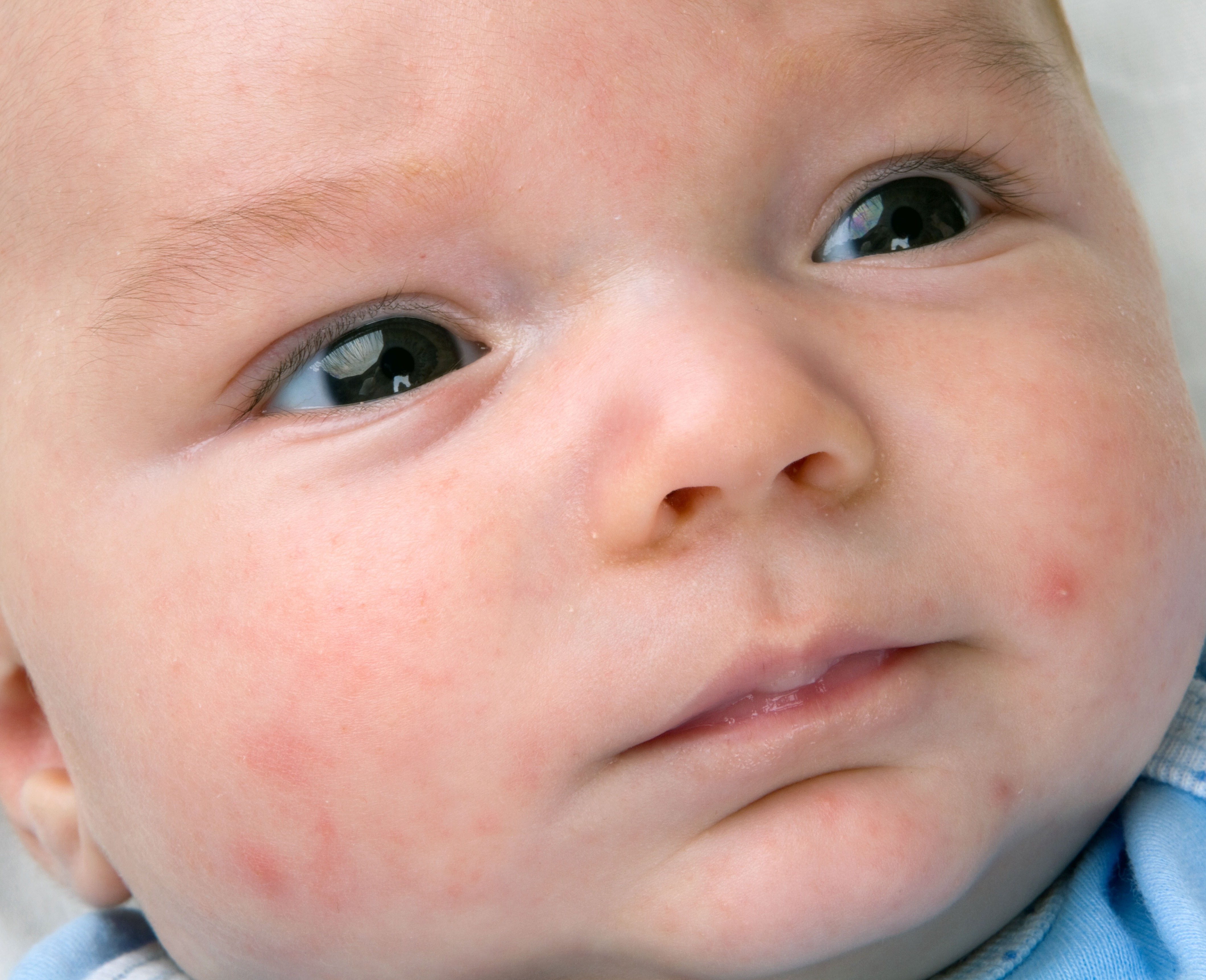
- Symptoms of baby acne include small red bumps or whiteheads (blocked pores under the skin), usually on the cheeks, chin or forehead.
- Causes of baby acne include short-term hormone changes that occur before birth and overactive oil glands in your baby’s skin.
- See your doctor if your baby has acne as well as other symptoms, such as a fever or swelling.
- Baby acne often goes away without treatment — your doctor may recommend a cream or gel to apply to their skin or prescribe antibiotics.
What is baby acne?
Baby acne is a common skin condition that can affect babies from 3 weeks to 2 years of age. It includes neonatal acne and infantile acne.
Neonatal acne
Neonatal acne can occur when your baby is between 3 weeks and 3 months of age. It affects around 1 in 5 babies. It is caused by temporary (short-term) hormonal changes that happen before birth.
Neonatal acne causes small red bumps on your baby’s skin, often on the face, neck or upper body.
Infantile acne
Infantile acne can occur when your baby is between 3 months and 2 years of age. It’s caused by overactive oil glands in your baby’s skin.
Infantile acne may cause blackheads (blocked pores on the surface of the skin) and whiteheads on your baby’s face and neck.
What are the symptoms of baby acne?
The symptoms of baby acne include skin changes such as:
- small, red bumps
- whiteheads
- blackheads
- cysts (deep, fluid-filled lumps)
Baby acne most commonly affects the:
- cheeks
- chin
- forehead
- neck
- upper body
CHECK YOUR SYMPTOMS — Use the Symptom Checker and find out if you need to seek medical help.
What causes baby acne?
Neonatal acne is due to hormones passed on to your baby before they are born. These hormones can last for up to 3 months after birth and may cause skin changes.
Infantile acne may be due to hormones produced by your baby, such as testosterone. These hormones can make the oil glands in your baby’s skin overactive, which may lead to acne.
When should I see my doctor?
See your doctor if your baby has:
- acne as well as a fever (temperature of 38°C or higher)
- redness or swelling around the acne
- acne that is not improving
- acne or other skin changes that you are worried about
If your baby is over 2 years of age and develops acne as well as changes to their breasts, genitals or body odour, see your doctor. It may be a symptom of abnormal hormone levels.
FIND A HEALTH SERVICE — The Service Finder can help you find doctors, pharmacies, hospitals and other health services.
How is baby acne diagnosed?
Your doctor can diagnose baby acne by examining them. Further tests are not usually needed.
If your baby is older than 2 years of age and develops acne, your doctor may recommend testing their hormone levels. This can be done with a blood test.
Your doctor or child health nurse can help work out if your baby has acne, or another skin condition such as:
- milia — blocked pores cause tiny white bumps on your baby’s face. It’s most common on the nose, cheek and around the eyes.
- erythema toxicum — this is a common rash in newborn babies that causes red and yellow pimples. It often appears on the face, chest and tummy.
- eczema — this is when sensitive or allergic skin becomes dry, red and irritated. It usually occurs on the scalp, arms and legs.
- heat rash — when your baby gets too warm and their sweat glands become blocked, they may get a red rash. You might see heat rash in places where sweat becomes trapped, such as their neck, chest and back.
Read more about common childhood rashes.
How is baby acne treated?
Treatment for baby acne will depend on your baby’s symptoms.
Most baby acne will get better without treatment. If your baby has chronic (long-lasting) acne, your doctor may recommend treatment with topical medicines (medicines applied to the skin), such as:
- benzoyl peroxide — this helps kill bacteria and reduce blocked pores
- retinoid cream — this helps reduce inflammation
- antibiotic gel — this helps kill bacteria and prevent infection
Your doctor may suggest giving your baby antibiotics, which can help prevent scarring. Antibiotics are only needed if your baby’s acne is severe.
Talk to your doctor or pharmacist about which treatment is right for your baby.
What are the complications of baby acne?
Complications from baby acne are rare, but may include:
- scarring after the acne has healed
- acne in adolescence (teenage years)
- infection of the acne
Can baby acne be prevented?
Often, baby acne can’t be prevented.
Your baby’s skin is still developing so it’s more sensitive than mature skin. Here are some tips to help protect your baby’s skin:
- Don’t use soaps or bubble baths — use plain water or a pH neutral soap-free wash if needed.
- Apply a non-fragranced moisturiser if your baby’s skin becomes dry.
- Try not to let your baby overheat — use light cotton fabrics for clothing and bedding.
- Keep your baby’s skin clean — gently clean their skin after feeding and being outside.
Learn more about washing your baby.
Learn more about looking after your baby's skin.
Resources and support
Visit The Royal Children’s Hospital Melbourne page for resources on how to care for your baby’s skin.
The Government of Western Australia provides information about common baby concerns, such as skin conditions and hormone changes.
Languages other than English
The Sydney Children’s Hospital Network offers a factsheet on common newborn concerns in multiple languages.
The Health Translations page has information about the signs and symptoms of rashes in languages other than English.
Speak to a maternal child health nurse
Call Pregnancy, Birth and Baby to speak to a maternal child health nurse on 1800 882 436 or video call. Available 7am to midnight (AET), 7 days a week.