Speak to a maternal child health nurse
Call Pregnancy, Birth and Baby to speak to a maternal child health nurse on 1800 882 436 (Opens in new tab) or video call. Available 7am to midnight (AET), 7 days a week.

Healthy eating refers to a dietary pattern that provides enough nutrients to support your child's growth and development.
Healthy eating provides essential nutrients such as:
Your child can get the nutrients they need by eating a wide variety of foods from the 5 food groups, which are:
Vegetables, legumes and beans contain important vitamins and minerals such as:
They also provide fibre and protein.
These foods come from many different parts of plants, including the:
Legumes and beans are the seeds of plants, such as green peas and lentils.
Most fruits are high in fibre and water. This helps you to feel full and avoid overeating.
Fruit also provides important vitamins and minerals such as:
Grains and cereals are mostly made from:
Grains provide your child with:
Grains also contain fibre which supports your child's digestive system (Opens in new tab) and helps prevent constipation (Opens in new tab).
It's best to choose wholegrain or high-fibre varieties of grain-based foods.
Foods that provide protein include:
Protein is important for brain, nerve and muscle development.
As well as protein, these foods provide:
Dairy foods include:
These foods, as well as non-dairy alternatives, provide:
Reduced-fat dairy is recommended for children over 2 years of age.
The amount your child needs from each of the 5 food groups depends on their age.
The Australian Government dietary guidelines (Opens in new tab) have a list of how many serves of each food group to aim for.
Find out how much is in a serving on the Healthy Eating for Children poster (Opens in new tab).
| 2-3 years | 4-8 years | 9-11 years | 12-13 years | 14-18 years | |
|---|---|---|---|---|---|
| Fruit | 1 serve | 1½ serves | 2 serves | 2 serves | 2 serves |
| Vegetables | 2½ serves | 4½ serves | 5 serves | 5-5½ serves | 5-5½ serves |
| Grains and Cereals | 4 serves | 4 serves | 4-5 serves | 5-6 serves | 7 serves |
| Lean meats, fish, poultry, egg, tofu, nuts and seeds, and beans/legumes |
1 serve | 1½ serves | 2½ serves | 2½ serves | 2½ serves |
| Dairy | 1½ serves | 1½-2 serves | 2½-3 serves | 3½ serves | 3½ serves |
Read more about how much food your child needs each day.
A high energy and high protein diet might be recommended if your child has been sick or if they are underweight (Opens in new tab).
Babies under 6 months of age only need breast milk or infant formula.
From 6 months of age your baby can start having small amounts of water in addition to breastmilk or formula.
From 12 months of age, you can introduce cow's milk or fortified milk alternatives such as soy milk or rice milk as a drink. Full-fat milk is better than low-fat milk until your child is 2 years of age.
Aim for about 4 cups of fluids per day for children aged 1 to 3 years. This includes water, milk and other drinks.
Children aged 4 to 8 years should drink about 5 cups of fluids a day.
This amount should be increased in hot weather or if children are unwell with a fever, vomiting or diarrhoea.
The best drinks for children aged over 12 months are water (Opens in new tab) and milk.
Many other drinks have added sugar or are acidic. If you have sweet or acidic drinks regularly it can lead to tooth decay.
For children it's important to limit or avoid drinks such as:
Many discretionary foods are also highly processed and contain high amounts of salt (Opens in new tab), saturated fat (Opens in new tab) and added sugar.
These foods are not essential for your child's nutrition. They are often called junk food because they are low in nutrients. They are also called 'sometimes foods' because they should be saved for special occasions.
Eating a lot of sweetened or fatty foods increases the risk of excess weight gain. Excess weight can lead to childhood obesity (Opens in new tab) and type 2 diabetes (Opens in new tab) as an adult.
Processed foods that contain added sugar include:
Many processed foods contain added salt, such as:
Read food labels to help you avoid high sodium foods.
Eating foods with too much saturated fat can increase your risk of having high cholesterol (Opens in new tab).
Some products high in saturated fat include:
Healthier options are:
By planning ahead, you can give your child a diet based on healthy foods. This will help them develop good food habits.
Writing a shopping list is a useful way to plan your meals. The list can remind you to buy mainly healthy foods.
If your family knows what meals are planned, it can help them avoid the temptation of junk foods and takeaway when the day gets busy.
Some things to put on your shopping list include:
Healthy breakfast ideas include:
You can make preparing healthy dinners easier by:
You can find meal plan suggestions at Cooking for Children (Opens in new tab) and Eat for Health (Opens in new tab).
Most children don't eat enough fruits or vegetables. Try to encourage your child to eat more fruits and vegetables by:
Avoid buying a lot of:
Children who get used to having junk foods available will often choose them over healthy snacks.
Eating healthy snacks can help your child meet their daily nutrition needs.
It's a good idea to keep a variety of healthy snacks in your home, such as:
Teach your child to enjoy a healthy diet by making mealtimes fun and interesting. You can:
When trying new foods, children may react to new textures and flavours. Many kids won't try a new food until it has been offered many times. Continue to offer a variety of food but try not to become frustrated or force them to eat when they don't want to.
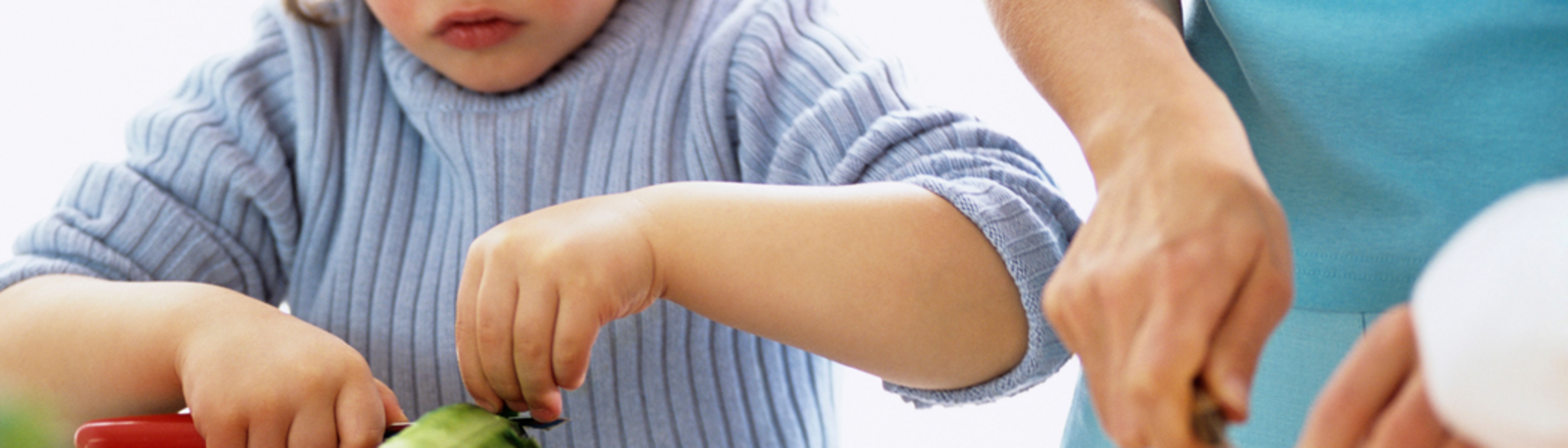
Including your child when you plan, cook and serve food may make them feel more excited about healthy eating. Let your child:
Try serving smaller portions at mealtimes. Encourage your child to ask for more if they are still hungry.
Some children have allergies or intolerances to certain foods, such as:
If you think your child has an intolerance or allergy, see your doctor or a dietitian (Opens in new tab). They can advise you on how to manage your child's allergy so they don't miss out on any key nutrients.
Children can become overweight from:
If you are concerned about your child's weight, speak to your doctor or find an Accredited Practising Dietitian (Opens in new tab) on the Dietitians Australia website.
Children are not usually given calorie-restricted diets because it can affect normal growth. Instead, it's usually better to focus on slowing their weight gain and allowing their height catch up.
Along with healthy eating, you should encourage your child to be physically active every day.
The Eat for Health (Opens in new tab) page offers information on:
The KidsHealth page offers a fact sheet on healthy eating for children (Opens in new tab), in multiple languages.
The New South Wales Government has an Australian Guide to Healthy Eating (Opens in new tab) in languages other than English.

Call Pregnancy, Birth and Baby to speak to a maternal child health nurse on 1800 882 436 (Opens in new tab) or video call. Available 7am to midnight (AET), 7 days a week.
Find out how we develop and review our content.
Last reviewed: December 2025