
Speak to a maternal child health nurse
Call Pregnancy, Birth and Baby to speak to a maternal child health nurse on 1800 882 436 (Opens in new tab) or video call. Available 7am to midnight (AET), 7 days a week.

Sore or cracked nipples can happen during breastfeeding, especially in the early days and first few weeks after giving birth. Some tenderness is normal as you adjust to breastfeeding. Ongoing pain, cracks or bleeding are often signs of nipple issues or conditions affecting your nipple or breast, for example, poor attachment or infection.
It's normal for your nipples to feel more sensitive in the first weeks of breastfeeding.
They may feel tender when your baby attaches to your breast and starts to suck. This should get better after a couple of minutes. Over time, the discomfort and sensitivity should go away. If your nipples are sore, you may notice they are squashed, pale, ridged or flattened after a feed. The skin on your nipple may become red and inflamed and it can break. This is known as a cracked nipple.
Sometimes the crack is small and hard to see. Breastfeeding with a cracked nipple can be painful and the nipple may bleed during feeds.
If the pain doesn't go away, the most common reason is that your baby is not attaching well to your breast. This means your nipple is not positioned well in your baby's mouth. Your nipple can become damaged as it is squeezed between your baby's tongue and palate. Some babies have a tongue tie, which can make it hard for them to attach well.
As your baby grows, new challenges can happen. Teething may lead to difficulties with attachment and some babies might start biting. Hormonal changes may also make your nipples more sensitive.
Pain that doesn't go away can also be a sign of other nipple problems, such as:
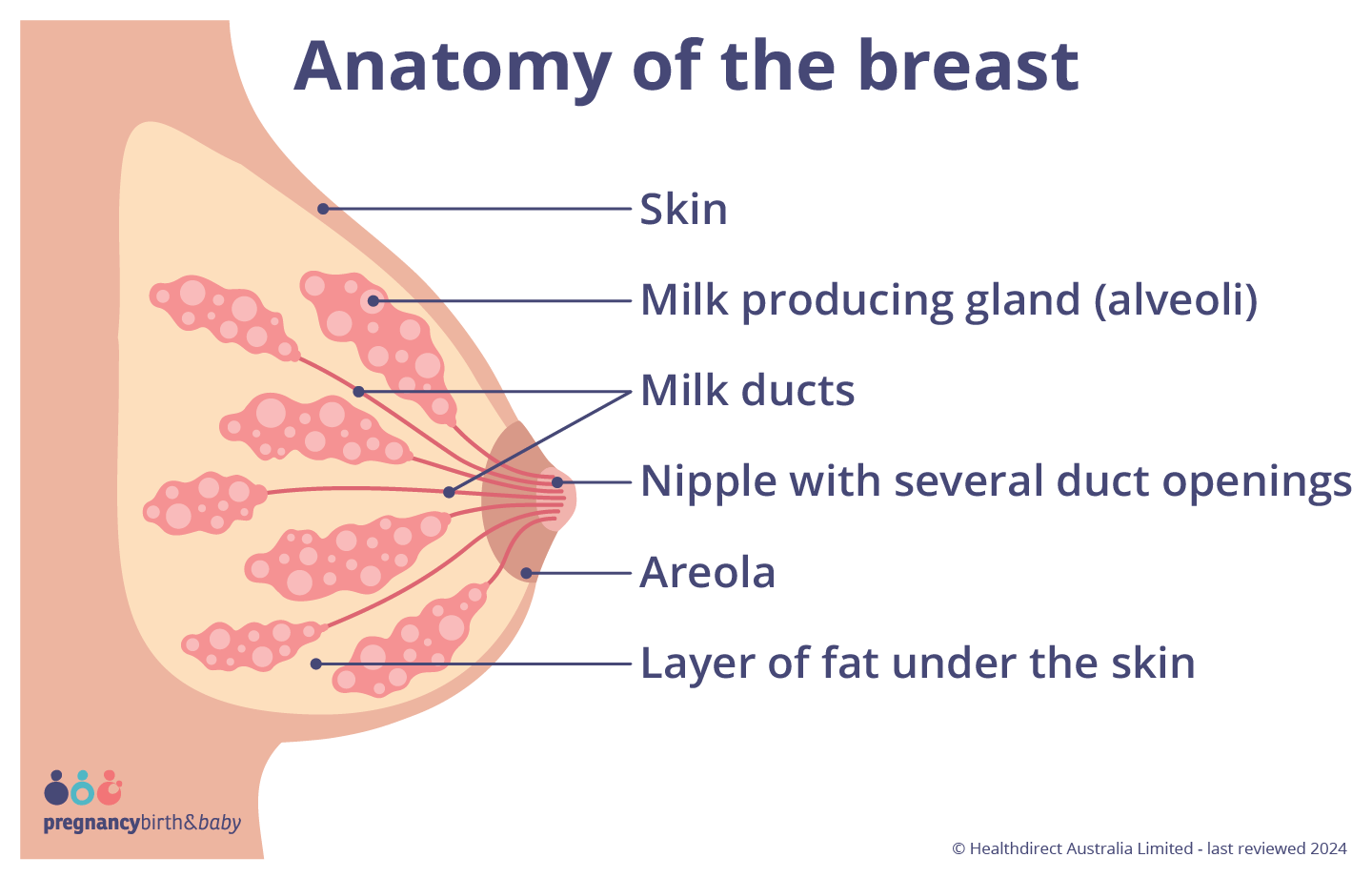
Anatomy of the breast.
You might notice that your nipple looks squashed or the wrong shape after a feed. You might see cracks in the surface of your nipple, blisters, grazes or bleeding.
Watch your baby as they start to suck. They may not be attaching well if:
If breastfeeding is uncomfortable, a lactation consultant may help you. They can take a close look at how breastfeeding is going and check your baby's mouth to find out the cause.
They may refer (Opens in new tab) you to a specialist for further diagnosis and treatment.
If you have sore or cracked nipples, you may need to ask a lactation consultant for assistance. Your lactation consultant can guide you or help you decide if you should see a doctor.
If your baby is attaching well but your pain doesn't improve, see your doctor. They can check whether you have another problem, such as a nipple infection or eczema.
See your doctor if you see yellow fluid coming from your nipple, or if a crack is taking a long time to clear up. These can be signs of infection and you might need medicine to treat it. If you feel unwell, flu-like symptoms (fever, chills or fast heart rate) or your breast is red or hard you may have mastitis and should see your doctor as soon as possible.
Sore, cracked or bleeding nipples can be treated with a combination of self-care and adjustments to your breastfeeding technique. If needed, pain-relief medicine may help you to treat pain.
There are a few things you can do to heal sore, cracked or bleeding nipples. It may help to:
If you can, continue breastfeeding. If it's too painful, you may need to take your baby off the breast for 12 to 24 hours. Rest your nipple and feed your baby expressed breast milk.
It might help to use a nipple shield. Talk to a lactation consultant or breastfeeding counsellor first to make sure you're using the shield correctly.
You may use pain-relieving medicine (Opens in new tab) if needed. Talk to your doctor, midwife, lactation consultant or pharmacist to make sure it's safe for breastfeeding.
It is usually safe for your baby to feed on a bleeding nipple. If you have cracked or bleeding nipples and you also have hepatitis B (Opens in new tab), hepatitis C (Opens in new tab) or other transmittable diseases, it's important to temporarily stop breastfeeding. This is because there is a risk of passing the infection to your baby.
Talk to your doctor about what to do in this situation.
Some people have such trouble with nipple pain that they stop breastfeeding early. If your nipples become damaged, you could develop a breast infection called mastitis.
Getting your attachment right early can prevent problems later. Try to make sure your baby's mouth is attached correctly from the first few days of breastfeeding.
When expressing milk with a breast pump, make sure that the suction on your breast pump is not too strong.
Change your breast pads regularly. Don't get soap or shampoo on your nipples.
Wash your hands (Opens in new tab), go to the toilet and have a bottle of water next to you. Sit in a comfortable position and try to relax.
Apply a warm washer to the breast and gently massage or express to help milk flow. Express some milk to soften the areola and lubricate the nipple.
After a few rapid gulps, your baby should start to suck and swallow in a regular rhythm. Breastfeeding should not be painful.
If the attachment feels uncomfortable, break your baby's suction by putting your finger in the corner of their mouth. Take your baby off and let them re-latch to your breast. Try different feeding positions.
Check your nipples for redness and misshapen appearance. Nipples that are creased, ridged or squashed are a sign that your baby is not properly attached.
Wipe your breasts with clean water and let them dry. It can help to leave your bra off for a while and allow your nipples to air. Make sure your bra fits you well.
Gently rub a few drops of milk over your nipples to protect them.
NSW Multicultural Health Communication Service offers translated information and support about breastfeeding topics, such as:

Call Pregnancy, Birth and Baby to speak to a maternal child health nurse on 1800 882 436 (Opens in new tab) or video call. Available 7am to midnight (AET), 7 days a week.
Find out how we develop and review our content.
Last reviewed: November 2024


