

Second trimester
12-minute read
Key facts
- The second trimester is the middle part of your pregnancy, from weeks 14 to 27.
- During the second trimester, your baby will grow much bigger.
- By about week 19 — or possibly sooner if this isn’t your first pregnancy — you may start to feel your baby move.
- Regular antenatal visits will help to keep you and your baby healthy.
- Eating well and staying active is as important as ever during this stage of pregnancy.
What is the second trimester?
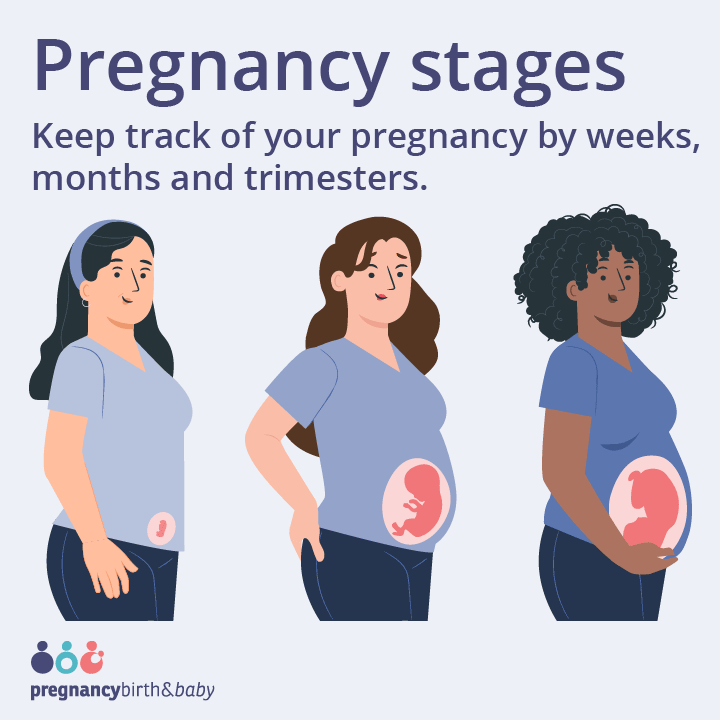
Trimesters are a helpful way to divide your pregnancy into stages. The three stages are known as the first, second and third trimesters. Each lasts about 3 months or 13 weeks.
The second trimester is the middle part of your pregnancy, from week 13 to week 26. During this trimester any nausea or morning sickness will probably begin to settle. You may also feel that you have more energy.
What happens to my body in the second trimester?
Your body goes through some big changes during the second trimester. Your uterus grows, and you may feel some aches as your ligaments stretch. The skin over your belly and breasts will stretch, which may cause mild itching. You may also notice stretch marks, which tend to fade over time.
Although your baby still weighs less than 1kg, your blood volume increases a lot. This is needed to meet the demands of your baby’s growth. It forms part of your pregnancy weight gain.
You will probably need maternity clothes as your body shape changes.
You should start sleeping on your side from 28 weeks.
What happens to my emotions in the second trimester?
Pregnancy can be a wonderful and exciting time, but it's also normal to experience some anxiety or low mood.
Feeling nervous or anxious is quite common. But, if these feelings begin to affect your wellbeing, it can be a sign of antenatal depression or anxiety.
Sometimes, one or both parents experience difficult emotions during pregnancy. You might be worried about the birth or about coping as a parent.
For some couples, pregnancy makes intimate partner abuse or family violence more likely.
If you are worried about anxiety, depression or family violence, there are ways to seek support.
- Talk to your midwife, doctor, obstetrician or child health nurse.
- Call Medicare Mental Health on 1800 595 212 for advice and to get connected to local mental health services.
- Phone Pregnancy, Birth and Baby on 1800 882 436.
- Call PANDA - Perinatal Anxiety Depression Australia on 1300 726 306.
- Visit 1800RESPECT for support if you are going through domestic violence.
What happens to my baby in the second trimester?
During the second trimester, your baby will grow quickly.
Your baby will be able to move freely within the amniotic sac in your uterus. By about week 19 — or sooner if this isn’t your first pregnancy — you may feel this movement. It might feel like a faint tickling or fluttering.
With time, your partner may also be able to feel your baby kicking and moving. Show them where to place their hand on your tummy. This is a great way for your partner to share the experience of pregnancy with you.
During these 3 months, your baby's body organs will continue to develop. Their liver, pancreas and kidneys all start to work. This is also the time when babies might start to suck their thumb.
By week 20, your baby can hear sounds, including the sound of your heartbeat,. They are also learning to recognise your voice.
What can I expect during antenatal visits in the second trimester?
Regular antenatal visits are an important part of staying healthy and making sure your baby is healthy. How often you see your midwife or doctor will depend on your own health and pregnancy progress. You may be able to have one or more appointment via telehealth.
For most people, visits will be every 4 to 6 weeks in the second trimester. Visits usually become more frequent towards the end of your pregnancy. If you are using midwife continuity of care, you should see the same midwife or team of midwives each time.
At antenatal visits during your second trimester, your doctor or midwife will check your:
- blood pressure
- hands and feet for swelling
- weight
- urine
- your baby's heart rate
- fundal height (measurement or size of your belly)
Your midwife or doctor will also discuss any recommended blood tests. This generally includes an oral glucose tolerance test at 24 to 28 weeks to check for gestational diabetes.
Your midwife or doctor will check your abdomen to monitor your baby's growth. They will listen to your baby's heartbeat. You will also be offered an ultrasound scan at around 18 to 20 weeks of pregnancy. This scan checks how your baby is growing and developing.
You may be offered vaccines to protect you and your baby from:
Think about any questions you might have about tests and scans. Your healthcare team will explain each one. You can decide if you want to have a test, scan or procedure.
GLOSSARY OF PREGNANCY AND LABOUR — Glossary of common terms and abbreviations used by health professionals in pregnancy and labour.
What are the second trimester genetic screening tests?
Your midwife or doctor may suggest doing genetic screening blood tests in your second trimester. Or, you may have already done these tests in your first trimester. The tests provide information about the chance that your baby will be born with a genetic disorder. You can choose if you do a genetic screening test or not.
The main genetic screening tests offered in the second trimester are:
- NIPT (non-invasive prenatal testing)
- maternal serum screen
Non-invasive prenatal testing (NIPT)
The NIPT (non-invasive prenatal testing) is a blood test that screens for common genetic conditions. You can do the test from week 10 of pregnancy onwards.
During pregnancy, some of the DNA (genetic material) from the placenta crosses into your blood. This DNA carries your baby’s genetic information stored on chromosomes.
The NIPT looks at this DNA to see if your baby has an increased chance if being born with a birth difference such as Down syndrome.
If your NIPT result shows that your baby has a high chance of having a chromosomal difference, you will be offered a diagnostic test. These include chorionic villus sampling (CVS) and amniocentesis. Diagnostic test can confirm the result for certain.
There may be an out-of-pocket cost for the NIPT. It is not covered by Medicare.
Maternal serum screen (MSS)
Second trimester maternal serum screening is an alternative to the NIPT. It checks the amount of 3 or 4 different hormones in your blood. The test looks at the levels of these hormones, and information such as your age to work out how likely it is that your baby will be born with a birth difference such as Down syndrome, trisomy 18 or a neural tube defect.
This test can be done between 15 and 20 weeks of pregnancy. Your doctor will explain the test results.
Are any ultrasound scans routinely recommended during the second trimester?
An ultrasound is recommended during all pregnancies at about 18 to 20 weeks of pregnancy. This test is known as a morphology or anatomy scan.
This ultrasound checks for:
- the position of the placenta
- your baby's growth and development
- the amount of amniotic fluid
- for any differences in how your baby’s body is built
- the length of your cervix
This scan is recommended even if you had an ultrasound in your first trimester.
How can I stay healthy through the second trimester?
Eating well and staying active is as important as ever during pregnancy. Being active is good for your physical and emotional health, and good for your baby too.
Light to moderate exercise in pregnancy is usually safe. Walking, swimming, yoga and and resistance exercises are all good exercises to consider in your second trimester.
High impact exercise and activities, where there is a risk of falling or overheating are not recommended. Check with your midwife if you are unsure about doing exercise.
Your choice of food during your pregnancy is also important but that doesn't mean eating for two. You just need to add a few more vegetables, wholegrain foods and a little extra protein.
While pregnant you should avoid:
- drinking alcohol
- smoking
- taking illicit drugs
What you eat during your pregnancy has been shown to affect how your baby grows. It can also affect your baby's health later in life. Ask your midwife or doctor if you should take any supplements.
When should I seek medical help?
Contact your doctor, midwife or hospital immediately if you experience any of the following symptoms:
- vaginal pain, bleeding or constant, clear watery vaginal discharge
- severe nausea, vomiting or abdominal pain
- sudden blurry vision or a severe headache
- sudden swelling of the face, fingers or ankles
- fever
- regular, painful contractions before 37 weeks of pregnancy
- a change in your baby's movements
- severe itching
What else should I consider in the second trimester?
Parental leave
Here are some things you might like to discuss with your partner (if you have one). You can also talk to your employer.
- How will you share the care of your baby with your partner (or other family members)?
- When do you plan to start your parental leave?
- When you intend to return to work?
- When would you like to share your pregnancy news with your employer?
- Returning to work after having a baby.
Antenatal classes
Ask your midwife or doctor about antenatal education available in your area.
Consider attending classes together with your birthing partner. You will learn a lot about how to prepare for labour. You will also meet other people who will share the experience of becoming parents.
Resources and support
Follow your pregnancy week-by-week to find out how your baby is growing and what is happening to your body.
The Royal Australian and New Zealand College of Obstetricians and Gynaecologists (RANZCOG) has factsheets and resources such as common questions in pregnancy.
Look at pregnancy factsheets on the Royal Women’s Hospital website
Queensland Government also have an online resource What to expect during pregnancy.
The Australian Government provides information about alcohol use during pregnancy.
Have a look through the information at Services Australia about parental leave payments.

Speak to a maternal child health nurse
Call Pregnancy, Birth and Baby to speak to a maternal child health nurse on 1800 882 436 or video call. Available 7am to midnight (AET), 7 days a week.
Learn more here about the development and quality assurance of healthdirect content.
Last reviewed: May 2025

